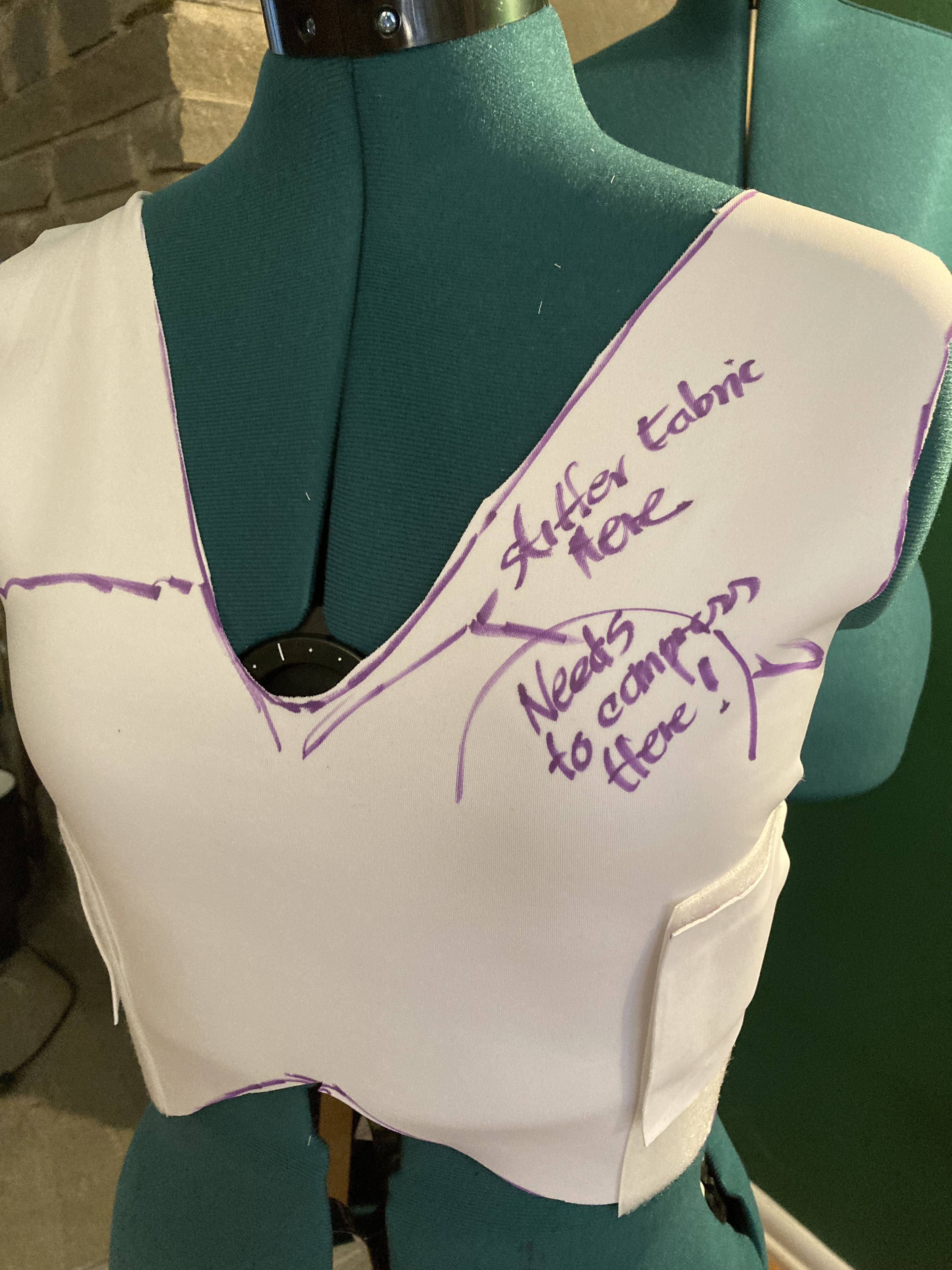
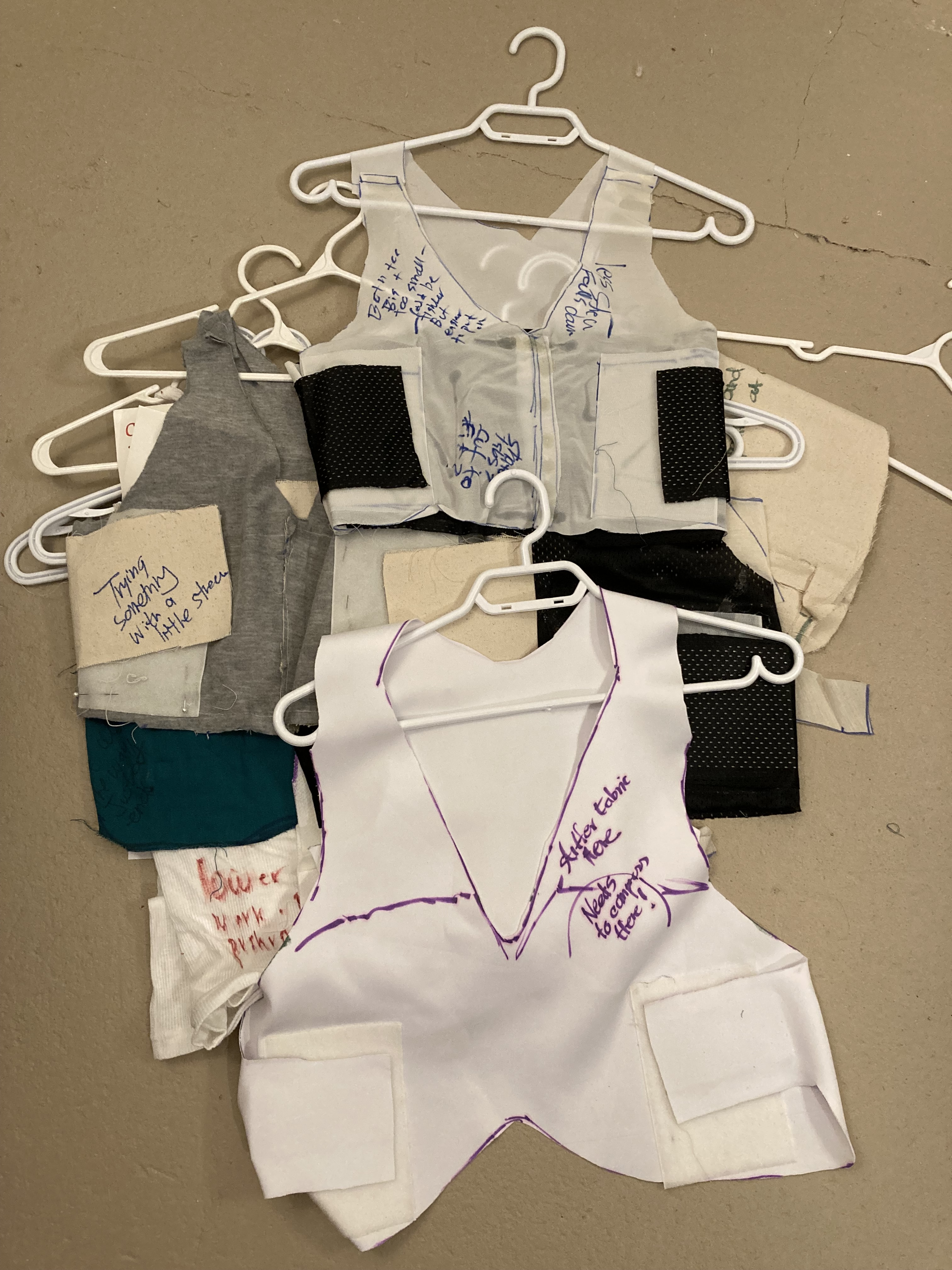
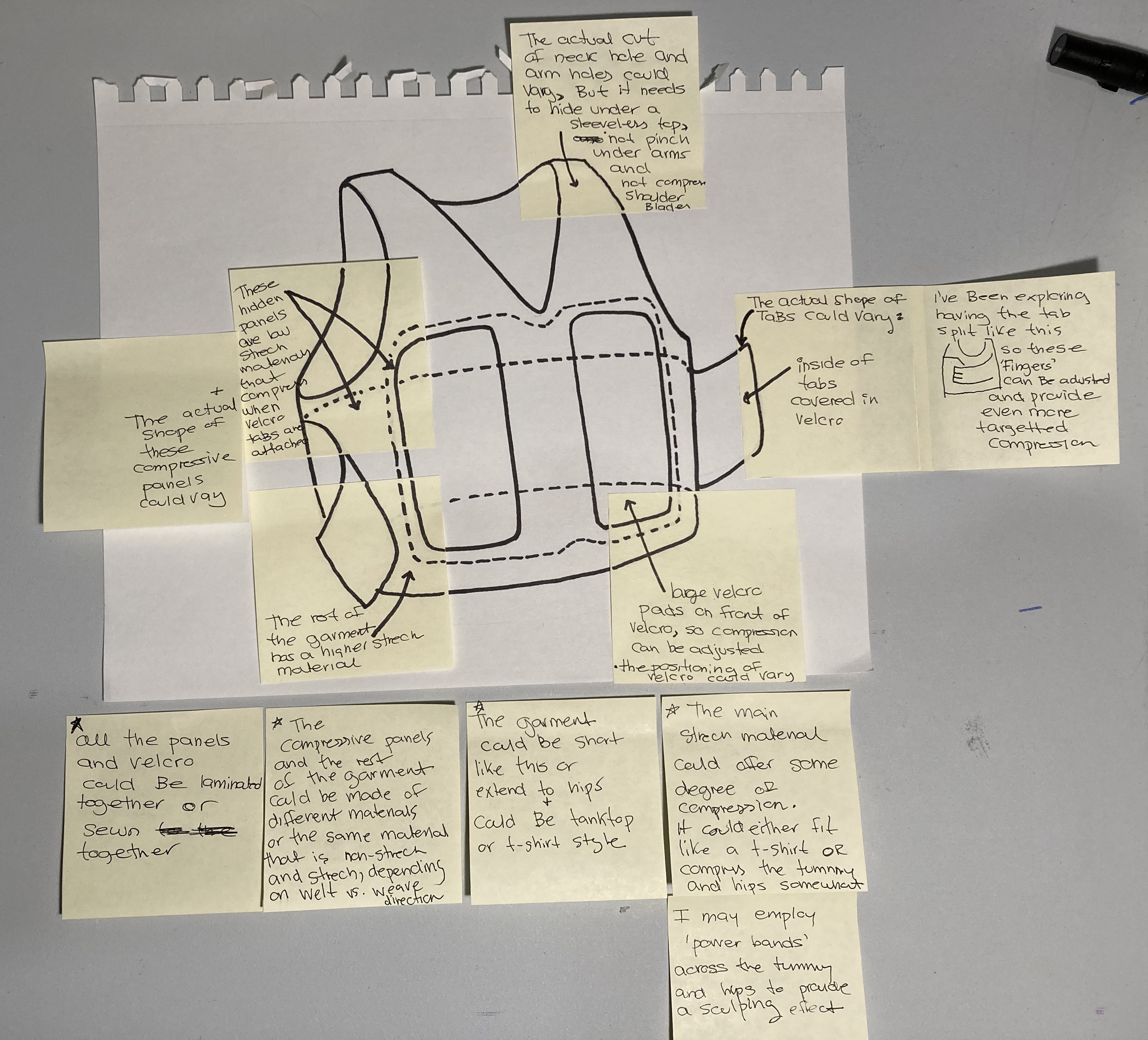
My work on chest binding began in 2020, when I developed and tested early prototypes of safer binders. During this phase, I collaborated with colleagues in public health, nursing, physiotherapy, psychology, and medical product design, and participated in the National Science Foundation (NSF) I-Corps program, which supports launching new projects and products from academic research. The photos below show some of my early prototypes and concepts.
Chest binding—the practice of compressing breasts for a flatter appearance—is an important contributor to gender affirmation and mental health for many transgender and gender-diverse people. At the same time, almost all binder users report negative physical effects, ranging from itching and back pain to rib fractures. My work brings research and practice together with the goal of creating safer and affirming binders, analyzing health impacts, and co-developing guidelines that minimize harm while preserving the benefits of binding.
Building on this foundation, I am now leading a large international initiative with collaborators across North America and Australia. I am one of the Chief Investigators on a major grant application currently under review with the National Health and Medical Research Council (NHMRC) in Australia. This project represents one of the first large-scale interdisciplinary studies on chest binding to integrate a design perspective.
Home page photo from the Gender Spectrum Collection
 Dr. Isabel Prochner